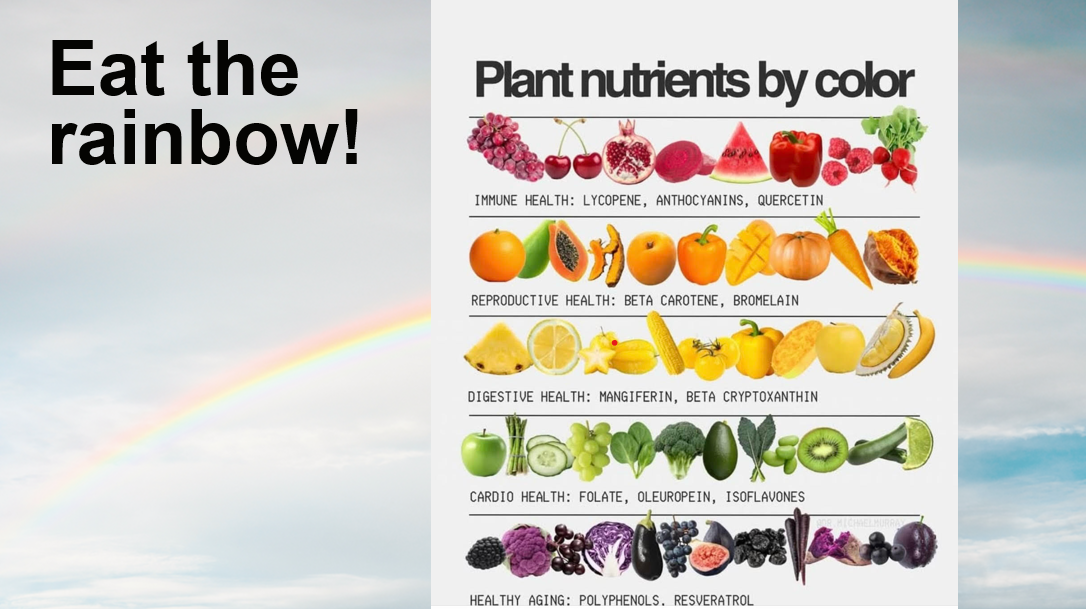
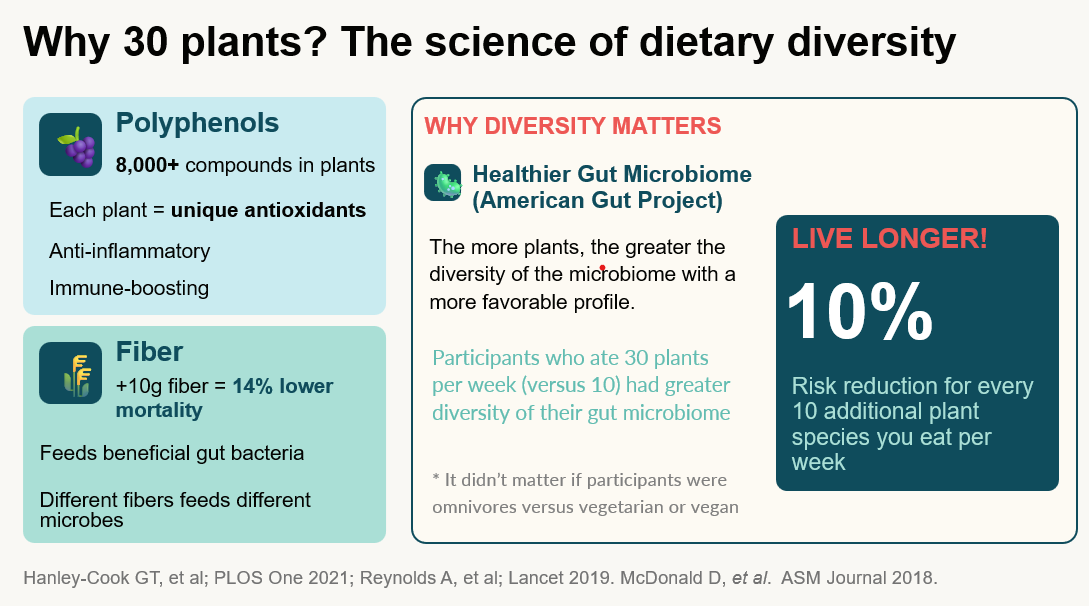
The goal of 30+ different plant foods per week is not about perfection — it’s about maximizing microbiome diversity, anti-inflammatory exposure, and metabolic resilience.
Greater plant diversity feeds greater microbial diversity — and a diverse microbiome supports metabolic, immune, and liver health.
1. Greater Gut Microbiome Diversity
The landmark American Gut Project (McDonald et al., 2018, mSystems) found that individuals who consumed ≥30 different plant foods per week had significantly greater gut microbial diversity compared with those consuming ≤10 plant foods per week.
Higher microbiome diversity is associated with:
- Better metabolic health
- Lower inflammation
- Improved insulin sensitivity
- Reduced risk of obesity and cardiometabolic disease
Plant foods provide different types of:
- Fiber
- Polyphenols
- Resistant starch
- Prebiotics
Each feeds different beneficial bacterial species.
2. Better Short-Chain Fatty Acid (SCFA) Production
Different plant fibers are fermented into short-chain fatty acids (butyrate, acetate, propionate), which:
- Strengthen gut barrier function
- Reduce intestinal permeability
- Lower systemic inflammation
- Improve insulin sensitivity
This is particularly relevant for MASLD and metabolic disease, where gut-liver axis dysfunction plays a role.
3. Reduced Inflammation
A diverse plant-based diet increases intake of:
- Flavonoids
- Carotenoids
Phenolic compounds
These bioactive compounds:
- Reduce oxidative stress
- Modulate inflammatory pathways
- Support vascular and liver health
4. Lower Risk of Chronic Disease
Higher dietary diversity — especially from plant foods — is associated with:
- Lower cardiovascular risk
- Improved glycemic control
- Reduced all-cause mortality
Dietary monotony, even if “healthy,” may not provide the broad phytonutrient spectrum needed for optimal resilience.
What Counts Toward the 30?
Different plants count separately, including:
- Vegetables
- Fruits
- Whole grains
- Legumes
- Nuts and seeds
- Herbs and spices
Examples:
- Spinach and kale = 2
- Lentils and chickpeas = 2
- Almonds and walnuts = 2
- Basil and oregano = 2
Herbs, spices, and different colors all count.