

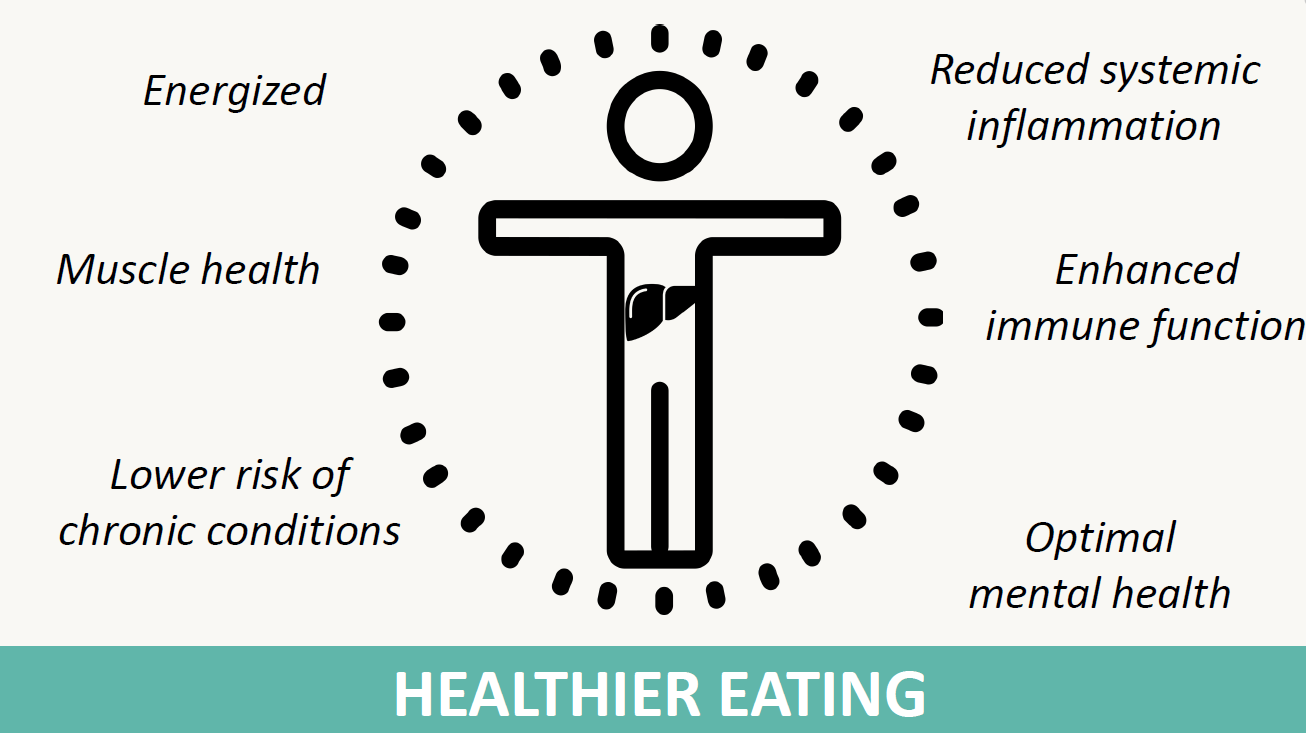
Healthier Eating means adopting a balanced, nutrient-dense dietary pattern that fuels the body with steady energy, supports mental well-being, and preserves muscle health while preventing muscle loss (sarcopenia). It plays a vital role in supporting metabolic health, lowering cardiovascular risk, and reducing the likelihood of chronic conditions. In individuals with liver disease, healthier eating also helps prevent complications such as ascites, hepatic encephalopathy, and osteoporosis. Importantly, this approach is not centered on restriction alone; rather, it emphasizes the quality of nutrients, appropriate balance of macronutrients, and thoughtful timing of meals to promote optimal health and long-term resilience.
The focus of a healthier eating approach is not about restriction alone — it is about nutrient quality, balance, and timing.
Emphasize Whole, Minimally Processed Foods
Focus on:
- Vegetables (especially leafy greens, cruciferous)
- Fresh fruits (moderate portions)
- Whole grains (oats, quinoa, brown rice)
- Legumes (lentils, beans, chickpeas)
- Nuts and seeds
- Extra virgin olive oil
- Fatty fish (salmon, sardines)
- Moderate poultry
- Fermented dairy (if tolerated)
These foods:
- Reduce oxidative stress
- Improve insulin sensitivity
- Support gut-liver axis health
- Reduce hepatic fat accumulation